What the Way You Fly Says About You Before You Say Anything at All
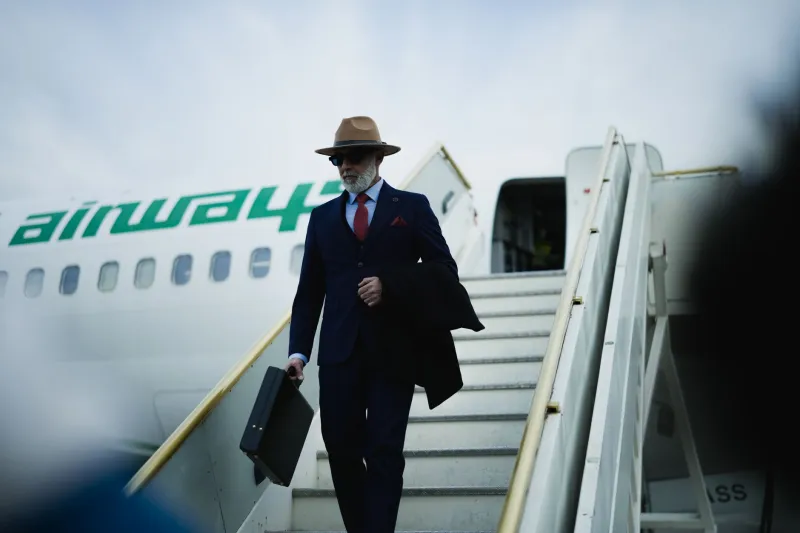
There is a particular kind of intelligence that operates beneath the surface of elite business culture in America—one that rarely appears in pitch decks or press releases, yet shapes the way powerful people are perceived, trusted, and ultimately chosen. It is the intelligence of signal. And few signals carry more weight in the rooms where decisions are made than the quiet, unremarkable fact of how you arrived.
In the world of high-net-worth individuals, C-suite executives, and the investors who back them, every observable choice is absorbed and interpreted. The car you take from the airport. The hotel you select. The time zone you appear to have slept in. And, perhaps most revealing of all, the aircraft that brought you there.
The Unspoken Vocabulary of Elite Travel
Social psychologists have long understood that status is communicated more through behavioral patterns than through explicit declaration. In elite professional circles, this dynamic is amplified. The individuals who populate boardrooms, private equity summits, and family office gatherings have developed finely calibrated instincts for reading the decisions of those around them—not because they are judgmental, but because they are discerning. They have learned that how a person manages their time, their comfort, and their exposure to risk is a reliable proxy for how they will manage capital, relationships, and complexity.
Flying commercially, particularly on routes where private alternatives exist, sends a specific message—whether intended or not. It communicates a tolerance for friction, for unpredictability, for environments where control is ceded to systems designed for the masses. For an executive negotiating a nine-figure acquisition or a founder seeking institutional backing, that message lands in ways that are rarely articulated but frequently registered.
Private aviation communicates something categorically different. It signals that an individual has internalized the calculus of time as a finite and irreplaceable resource. It suggests a preference for controlled environments, for precision over approximation, and for the kind of operational discipline that translates directly into how one leads an organization.
Perception Is Not Vanity—It Is Strategy
It would be a mistake to frame this conversation as one about appearances for their own sake. The individuals who understand the signaling power of private aviation are not motivated by ego. They are motivated by the same strategic clarity that governs every other major decision in their professional lives.
Consider the venture capitalist who flies into Teterboro on a charter before a Monday morning partner meeting in Manhattan. Or the family office principal who arrives in Aspen via a midsize jet for a three-day off-site with prospective co-investors. These choices are not incidental. They reflect a coherent set of values—efficiency, discretion, intentionality—that the people in those rooms recognize and respect.
In the context of high-stakes relationships, trust is built on pattern recognition. When a counterpart observes that you operate without unnecessary friction, that you arrive composed and prepared rather than depleted and reactive, they are gathering data. That data informs their confidence in you. And confidence, in these circles, is the precondition for every meaningful transaction.
The Competitor Who Already Understands This
Here is an uncomfortable truth worth sitting with: in any competitive situation—whether you are pursuing a partnership, a board seat, a capital raise, or a key hire—there is almost certainly someone on the other side of the table who has already made this calculation. They are not flying commercial because they cannot afford otherwise. They are flying private because they understand that the way they move through the world is an extension of their professional identity.
This is not conjecture. The private aviation market in the United States has expanded substantially among what analysts describe as the "ascendant wealth" segment—individuals and firms that have crossed a threshold of financial success and are now competing at a level where every variable in their presentation matters. For these individuals, the decision to fly private is not a reward. It is a positioning tool.
The question is not whether this signaling dynamic exists. It does. The question is whether you are participating in it deliberately or leaving the interpretation of your choices to chance.
What Discretion Communicates That Ostentation Cannot
One nuance worth examining is the distinction between private aviation as a display of wealth and private aviation as a demonstration of judgment. The two are not the same, and the most sophisticated observers in elite business culture understand the difference immediately.
Arriving on a heavy-cabin aircraft configured for maximum opulence, with a retinue and a visible production around your arrival, reads as performance. It may impress certain audiences, but it can also introduce skepticism among the most serious players—those who have seen enough to know that the loudest signals are often compensating for something.
Arriving quietly, efficiently, and prepared—on a well-chosen aircraft suited to the mission, without theater—reads as mastery. It communicates that you have nothing to prove and everything to accomplish. This is the register that resonates most deeply with board members, institutional investors, and the kind of high-caliber operators who are evaluating not just your proposal but your character.
JetRest exists precisely for individuals who understand this distinction. The platform is not designed for those who want to be seen flying private. It is designed for those who want to fly private well—with the intelligence, discretion, and strategic alignment that transforms a mode of transportation into a competitive advantage.
The Cumulative Effect of Consistent Choices
Reputation in elite circles is not built in a single meeting or a single arrival. It is constructed over time, through the accumulation of consistent signals. Every time you appear at a high-stakes engagement rested, focused, and unhurried, you are depositing into an account of professional credibility. Every time you arrive visibly fatigued, delayed, or distracted by the indignities of commercial travel, you are making a different kind of deposit.
Over months and years, these patterns become part of how you are known. They become part of the invisible resume that precedes you into every room—the one that no LinkedIn profile captures, but that the most influential people in your network have already read.
The individuals who have built the most durable reputations at the apex of American business understand that how they operate is inseparable from who they are perceived to be. They do not leave that perception to chance. They curate it with the same rigor they apply to their portfolios, their teams, and their strategies.
The aircraft that carries you to your next critical engagement is not a footnote to that story. It is one of its most eloquent sentences.