The Terminal Is the New Clubhouse: Inside America's FBO Social Revolution
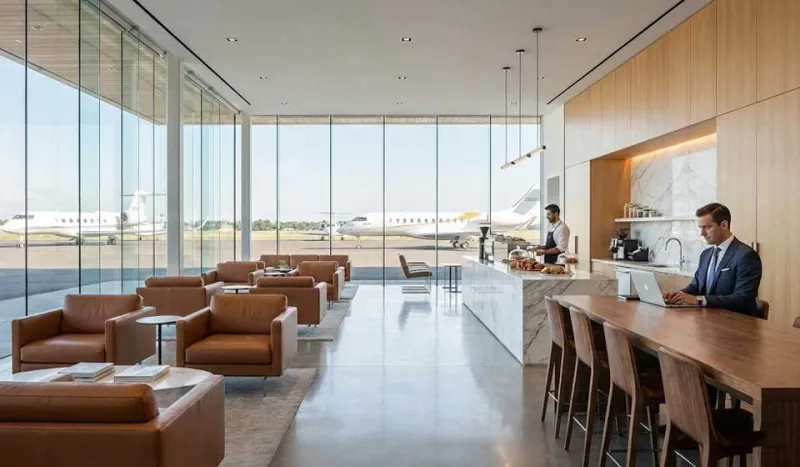
Photo: luxury private jet terminal FBO lounge interior elegant, via charterwind.com
For decades, the fixed-base operator was the least glamorous part of private aviation — a place for fuel trucks, paperwork, and a lukewarm pot of coffee. That era is over. Across the country, FBOs have undergone a transformation so complete that the terminal itself has become a destination, and in certain zip codes, a credential.
From Fuel Stop to Front Parlor
Walk into the newer facilities in Aspen or West Palm Beach and you may mistake the space for a members-only club: curated art, espresso programs, private meeting suites, sommelier-selected wine cellars, and lounges that rival any five-star hotel lobby. Operators like Atlantic, Signature, and boutique independents have recognized that their clientele doesn't merely pass through — they linger.
In markets like Napa County and East Hampton, the FBO has absorbed functions once reserved for the golf club or the yacht squadron. Deal-making, introductions, and quiet vetting of new acquaintances increasingly happen on the leather sofas of the executive lounge, hours before wheels-up.
The Unwritten Membership
What makes these spaces genuinely exclusive is not the amenity list — it is the culture. At certain terminals, regulars know which lounge area is 'theirs,' which staff can be trusted with sensitive conversations, and which guests have earned a nod. There is no application form. Access is a function of aircraft, reputation, and repetition.
This creates a subtle social hierarchy that seasoned travelers learn to read. Choosing your departure point — the quieter FBO in Teterboro versus the bustling one, the boutique facility in Napa versus the high-volume operation — now signals taste and standing in ways that parallel the choice of country club a generation ago.
Where the Real Networking Happens
Ask any charter operator or flight department veteran and they will tell you: some of the most consequential conversations in American business now occur in these terminals. The pre-flight window — unhurried, unrecorded, among peers — is a rare environment in modern commercial life.
Several operators have leaned into this deliberately. Concierge desks broker restaurant reservations and ranch tours. Some facilities host small tastings, art previews, and philanthropic receptions. The FBO has become infrastructure for relationship capital, not just aviation logistics.
A Practical New Consideration
For families and executives building their travel patterns, the lesson is straightforward: the FBO you choose is part of the experience you are buying. Evaluate it the way you would a club — the quality of the staff, the discretion of the environment, the caliber of the room. In today's private aviation landscape, the hangar door opens onto more than a runway. It opens onto a room.