The Chemistry of Landing: What Your Arrival Method Does to Your Brain Before You Walk Into the Room
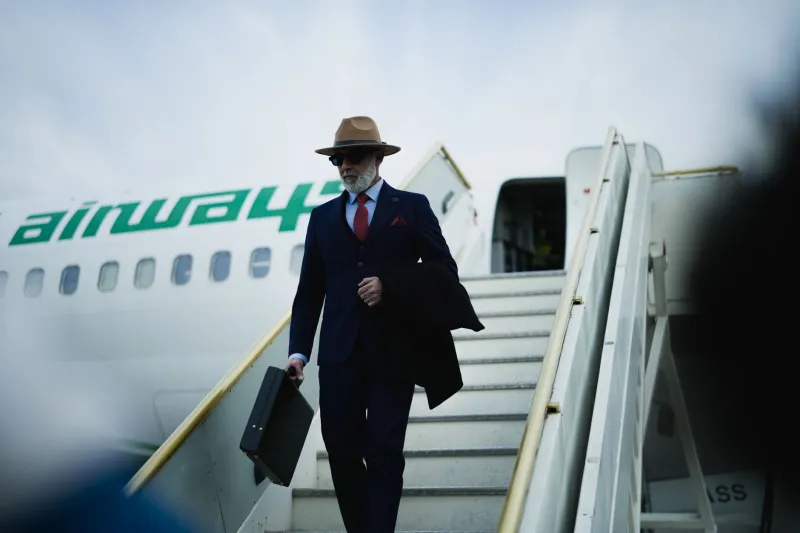
The deal is not decided in the conference room. It is decided, in significant part, in the ninety minutes before you enter it — and the neurochemical conditions governing your judgment during that window are largely determined by how you traveled to get there.
This is not a philosophical observation. It is an increasingly well-documented physiological reality, and its implications for executive performance are substantial enough that the most sophisticated dealmakers in the United States have quietly restructured their travel architecture around it.
Cortisol: The Invisible Opponent in Every Negotiation
Cortisol is the body's primary stress hormone, and it operates on a logic entirely indifferent to professional stakes. It does not distinguish between a physical threat and the social threat of a missed connection. It responds to uncertainty, to loss of control, to sensory overload — all of which are endemic to commercial aviation in ways that have no equivalent in private travel.
The commercial travel sequence begins generating cortisol well before departure. The drive to a major hub airport, the navigation of check-in infrastructure, the TSA checkpoint — each introduces low-grade but cumulative stressors that activate the hypothalamic-pituitary-adrenal axis. By the time a commercial traveler reaches their gate, their cortisol levels are meaningfully elevated above baseline. A delayed departure, a middle seat assignment, a turbulent approach, and a crowded baggage claim extend this activation across the entire travel duration.
Research published in psychoneuroendocrinology journals has established that elevated cortisol impairs prefrontal cortex function — the neural region governing complex reasoning, impulse control, and strategic judgment. These are not ancillary cognitive functions for an executive entering a major negotiation. They are the primary tools of the work.
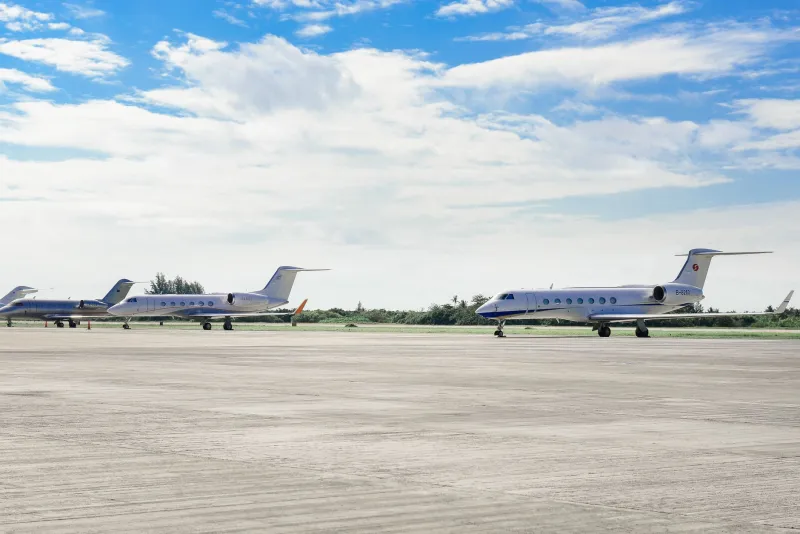
The private aviation arrival sequence introduces none of these stressors. The traveler departs from a fixed base operator with minimal wait time, boards without a crowd, and arrives at a destination airport with no baggage claim, no terminal navigation, and ground transportation arranged in advance. The cortisol curve that commercial travel generates over four to six hours simply does not form.
The Parasympathetic Dividend
Beyond cortisol suppression, private aviation creates conditions that actively promote parasympathetic nervous system dominance — the physiological state associated with calm, clarity, and what researchers describe as "open monitoring" cognition. This is the mental mode in which pattern recognition is sharpest, social cue detection is most accurate, and the capacity to hold multiple strategic variables simultaneously is at its peak.
The cabin environment of a private aircraft contributes to this state through several mechanisms. Noise levels are substantially lower than commercial cabins, reducing the auditory stress load that unconsciously occupies cognitive bandwidth throughout a flight. The absence of strangers in the immediate environment eliminates the low-level social vigilance that public spaces require. Control over cabin temperature, lighting, and recline position allows the body to regulate itself toward comfort rather than tolerating imposed conditions.
Taken individually, none of these factors is decisive. Taken together, across the full duration of a travel sequence, they compound into a meaningfully different neurological arrival state.
The Two-Hour Window and Why It Defines Everything
Cognitive performance research has consistently identified a critical recovery window following high-stress experiences. The brain does not reset instantaneously when a stressor is removed. Cortisol has a half-life measured in hours, not minutes. An executive who lands from a stressful commercial flight and walks directly into a board meeting two hours later is not operating on a clean cognitive slate. They are operating on the residual neurochemistry of everything that happened to them in the preceding six hours.
This window — the approximately two hours between landing and a major professional engagement — is where the private aviation advantage becomes most quantifiable. The commercial traveler arriving in that window is managing cortisol decline, rehydration, and the cognitive reorganization required after sustained sensory stress. The private traveler arriving in the same window is, in the most literal neurological sense, a different person.
They are calmer. Their working memory is less encumbered. Their capacity for nuanced social reading — the kind required to detect a counterparty's hesitation, to calibrate an offer in real time, to read the room accurately — is operating without the friction of stress-induced cognitive narrowing.
What the Research Suggests About Decision Quality
Decision science has documented extensively the phenomenon of decision fatigue — the degradation in choice quality that follows sustained cognitive demand. Commercial travel is, among other things, a sustained cognitive demand generator: route navigation, gate changes, boarding sequences, in-flight disruptions, and arrival logistics each require executive function expenditure. By the time a fatigued commercial traveler faces a consequential decision, their decision-making architecture has already been drawn down.
Private aviation, by contrast, preserves that architecture. The cabin becomes a recovery environment rather than an additional stressor. Executives who use flight time for rest, preparation, or simply unstructured decompression arrive with their decision-making resources intact rather than partially depleted.
The financial implications of this difference are not abstract. In a negotiation where a single concession can represent millions of dollars, the cognitive acuity to recognize the moment and hold the position is worth orders of magnitude more than the cost of the flight that preserved it.
Designing for Arrival State
The most strategically sophisticated travelers do not treat the flight as a prelude to the work. They treat it as the first phase of the work — a phase in which the primary objective is arriving in the optimal neurological condition for what follows.
This means structuring the cabin environment deliberately. It means choosing departure times that align with natural circadian rhythms rather than commercial schedule availability. It means building arrival buffers that allow for genuine decompression before engagement rather than rushing from tarmac to table.
The private jet does not merely transport the executive. Properly used, it delivers a version of that executive whose brain chemistry is calibrated for the task ahead. In a world where competitive advantage is measured in marginal edges, that calibration may be the most consequential variable in the room.